Cupping for colds, congestion and seasonal tightness: what to expect
If your neck and shoulders feel tighter as the weather gets colder, you’re in good company. You might be sitting longer, moving differently, or carrying more tension after a busy day. At Maya Kron Wellness, I sometimes use cupping alongside acupuncture to address that tight, restricted feeling, especially in the neck, shoulders, back, and hips.
What is cupping therapy?
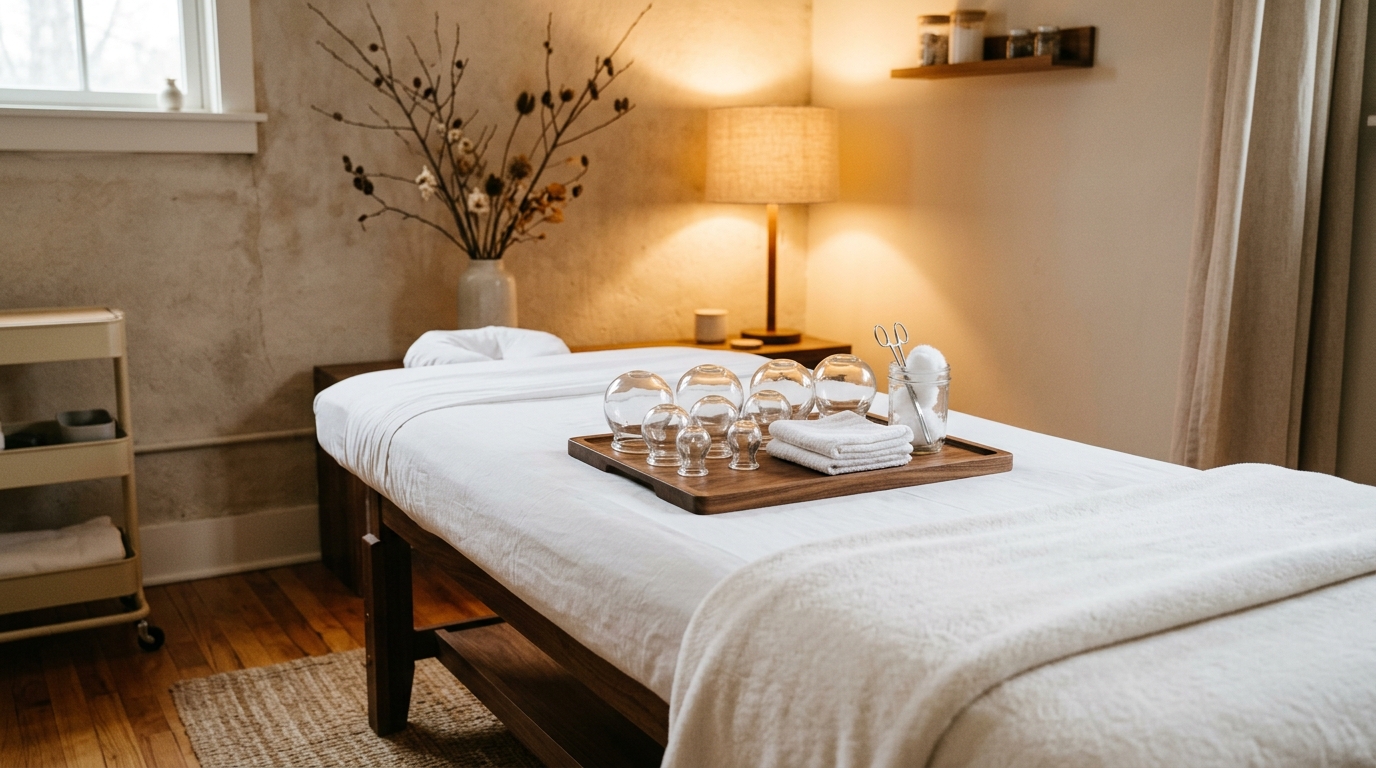
Cupping is a technique used in Traditional Chinese Medicine (TCM). I place small cups on the skin to create suction, which gently lifts the skin and superficial tissue. I may leave the cups in place briefly or glide them over an area that feels tight. The technique and amount of suction depend on what brings you in and how the treatment feels to you.
In TCM, we sometimes describe a tight, uncomfortable area as an area of stagnation. In everyday terms, that might be the spot between your shoulder blades that always feels tight after a long day at your desk. Cupping gives me a way to focus on that area while taking into account the bigger picture, including how you move, how you sleep, what makes your symptoms worse, and what you’d like to get back to doing comfortably.
Why I might suggest cupping in colder months
When it’s cold out, you might spend more time indoors, change your exercise routine, or find yourself shrugging your shoulders against the wind. If your upper back feels tight by the end of the day or your hips feel stiff after sitting, cupping may be one part of a treatment plan focused on comfort and movement.
Sometimes patients ask about cupping when they feel congested or heavy through the upper back. In TCM, I consider those symptoms alongside the rest of your health history. If cupping fits, its role is complementary. It does not treat a cold or respiratory infection. Significant, persistent, or worsening respiratory symptoms should be medically evaluated.
What does cupping feel like?
People often describe it as a firm pull or stretch. The sensation can be unfamiliar at first, and some spots may feel more sensitive than others. I check in with you during treatment and can adjust the suction or move a cup at any point. If something feels sharp or uncomfortable, tell me right away. You don’t have to sit through it.
Afterward, you may feel looser, warmer, or relaxed. Some people notice mild tenderness where the cups were placed. How you respond helps me decide whether to use cupping again and what to adjust next time.
What should I expect afterward?
Cupping can leave temporary round marks that range from light pink to deep red or purple. They often fade within several days, though some can take up to about two weeks. If you have a photo shoot, an event, or plans to wear something that exposes the treated area, let me know so we can plan around it.
Aftercare can be simple. Drink water as you normally would, and if the area feels sore, give yourself permission to go a little easier on your workout. A walk or light stretching is fine if it feels comfortable. You can keep the area covered if the cold bothers you, and avoid scrubbing it or applying irritating products while the skin is sensitive.
Is cupping right for you?
Before we start, I’ll ask about your health history, medications, and supplements. Please let me know if you take blood thinners, bruise easily, have a bleeding disorder or skin condition, or recently had a procedure. Tell me about any rashes or open wounds and whether you’re pregnant, trying to conceive, or recently postpartum. Those details help me decide where and how to use cupping or whether a different approach would suit you better.
Can I combine cupping with acupuncture?
Yes. At Maya Kron Wellness, I often use the two together. If you come in with recurring neck tension, for example, I might use acupuncture as part of the overall treatment and cupping to focus on the upper back and shoulders. Other visits may call for acupuncture alone. We’ll decide based on how you’re feeling that day and what you want the treatment to address.
If you’re curious about cupping therapy on the Upper West Side, bring it up at your next visit. I’m happy to explain what it might feel like and talk through whether it makes sense for you.